AI-First Product Engineering for Scalable Software
Why treating AI as core product infrastructure, not a later feature, creates more scalable and adaptive software systems.
- Author: Crew Digital
- Published on
- Estimated reading time: 4 min read
Shipping software with AI added at the end is becoming a costly pattern.
Teams launch a conventional product, then try to layer intelligence on top. The result is usually fragmented architecture, duplicated workflows, and slower iteration once usage grows.
An AI-first approach flips this model. Instead of asking "where can we add AI later?", teams start with "which decisions, predictions, and automations should the product learn to make from day one?"
What AI-First Actually Means #
AI-first product engineering is not about putting a chatbot in every screen.
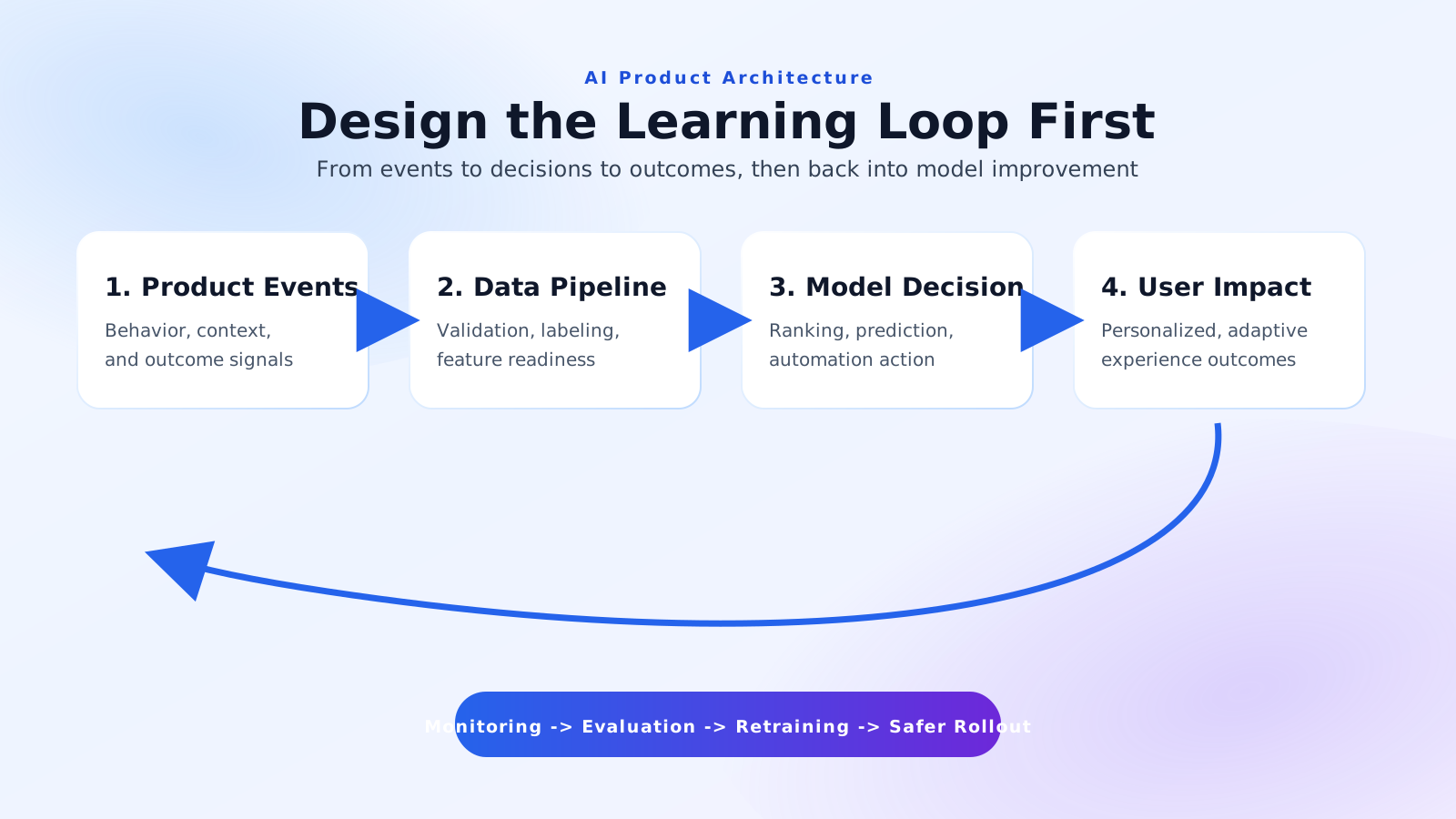
It means designing the product around continuous learning loops:
- data is captured with learning in mind
- model behavior is observable in production
- feedback from users improves outcomes over time
- product decisions are informed by probabilistic systems, not only static rules
In practical terms, AI becomes part of product architecture, delivery process, and operating model.
Why This Matters Now #
Several shifts make AI-first design practical for more teams today.
1. Data Is Growing Faster Than Rule Systems #
Most modern products generate behavioral, transactional, and contextual data continuously. Rule-based logic breaks down when variation increases. ML-based systems can handle ambiguity and improve with fresh signals.
2. Tooling Is More Production-Ready #
Model APIs, vector infrastructure, and ML observability tooling have matured. Teams can now ship useful AI capabilities without building every layer from scratch.
3. User Expectations Have Changed #
People now expect recommendations, prioritization, summarization, and proactive suggestions as normal product behavior. "Static" experiences feel outdated quickly.
The Scalability Advantage #
AI-first systems scale differently from traditional feature sets.
Personalization Without Manual Branching #
Instead of hardcoding many user segments and UX variants, models adapt behavior by context. This reduces long-term complexity in decision logic.
Better Operational Leverage #
Automation in triage, support, classification, and forecasting can reduce repetitive workload, allowing teams to focus on higher-leverage product work.
Continuous Product Improvement #
AI-first products can improve post-launch through better data, retraining, and evaluation cycles, rather than only through large feature rewrites.
Core Engineering Foundations #
AI-first products succeed when three foundations are treated as first-class engineering concerns.
Data Foundation #
- event taxonomy that maps to product outcomes
- data quality controls and lineage
- privacy and permission-aware data handling
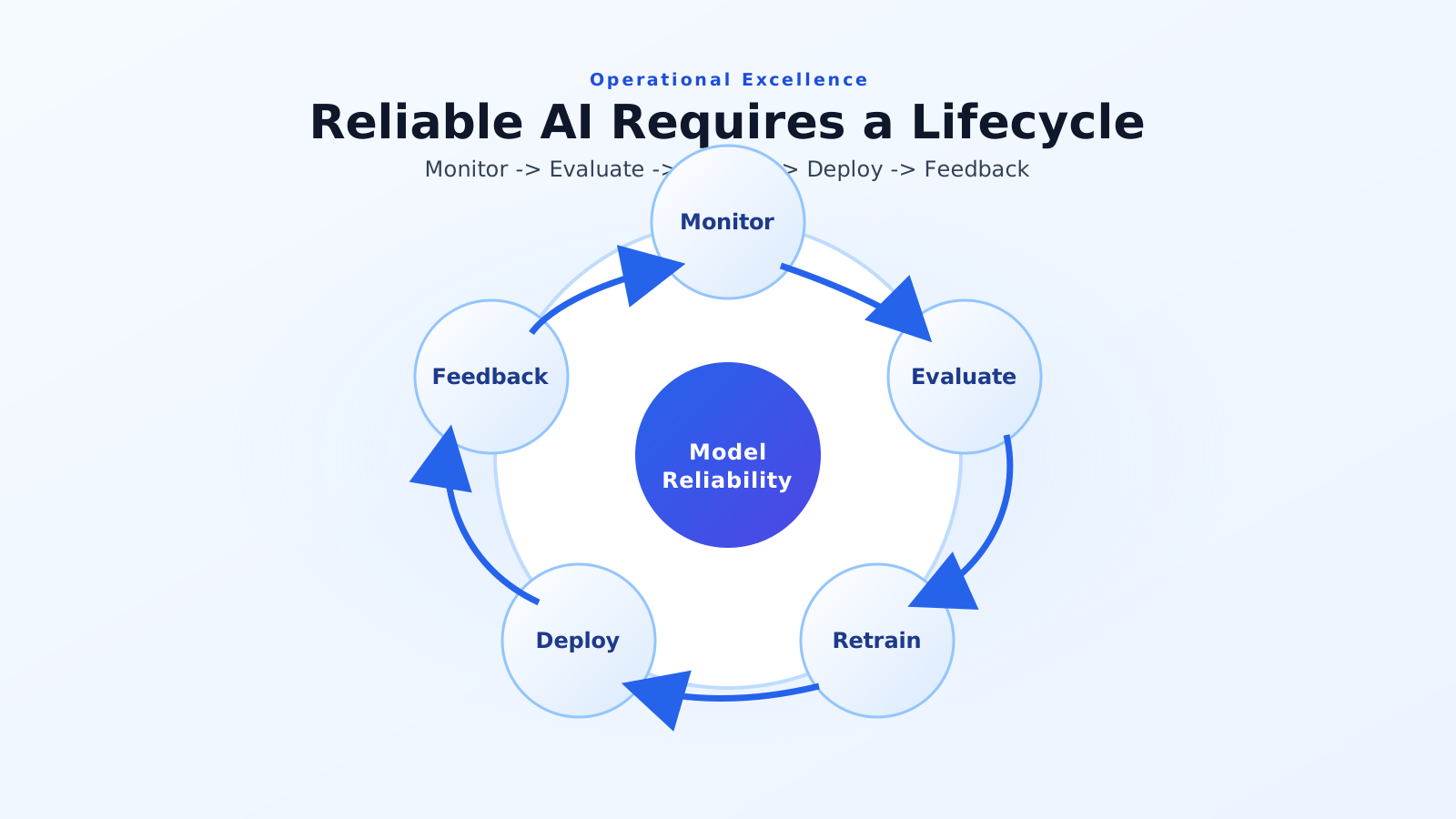
Model Lifecycle #
- clear offline evaluation metrics
- online monitoring for drift and regressions
- safe rollout, rollback, and versioning strategies
Product + ML Operations #
- shared workflows across product, engineering, and data teams
- CI/CD patterns for model-integrated features
- measurable business KPIs connected to model behavior
Common Pitfalls #
Teams often hit predictable issues when adopting AI-first patterns:
- training on low-quality or biased data
- shipping models without strong observability
- over-optimizing model metrics while ignoring product outcomes
- treating AI as a side project instead of core product capability
The fix is usually process design, not just better models: tighter feedback loops, shared accountability, and clear production standards.
Who Should Move First #
AI-first is especially valuable when your product depends on one or more of these:
- high-volume decision-making
- real-time or near-real-time adaptation
- predictive workflows (risk, churn, demand, fraud)
- personalized user journeys at scale
This applies to startups building differentiated products and to enterprise teams modernizing legacy systems.
A Practical Starting Plan #
If you are transitioning from traditional product engineering, begin with a narrow scope:
- choose one high-impact workflow with measurable outcomes
- instrument data capture and feedback loops before model complexity
- define success using both model and business metrics
- ship in guarded stages and measure behavior in production
Small, well-instrumented wins build confidence faster than broad AI transformation programs.
Final Thought #
Scalable software is no longer just about infrastructure elasticity. It is increasingly about decision elasticity: can your product learn, adapt, and improve as context changes?
AI-first product engineering gives teams that advantage. The earlier it is designed into the product, the cheaper and stronger that advantage becomes.
Explore related topics: Our services | Case studies | Contact us