Engineering Leverage With AI Workflows
A practical system for using AI to increase product engineering speed without sacrificing quality.
- Author: Crew Digital
- Published on
- Estimated reading time: 2 min read
Most teams adopt AI in random pockets. One engineer uses an assistant for unit tests, another uses prompts for SQL, and a product lead uses AI for PRDs. This helps, but it does not compound.
Leverage appears when the team treats AI as a workflow layer, not a tool.
Start With Friction Mapping #
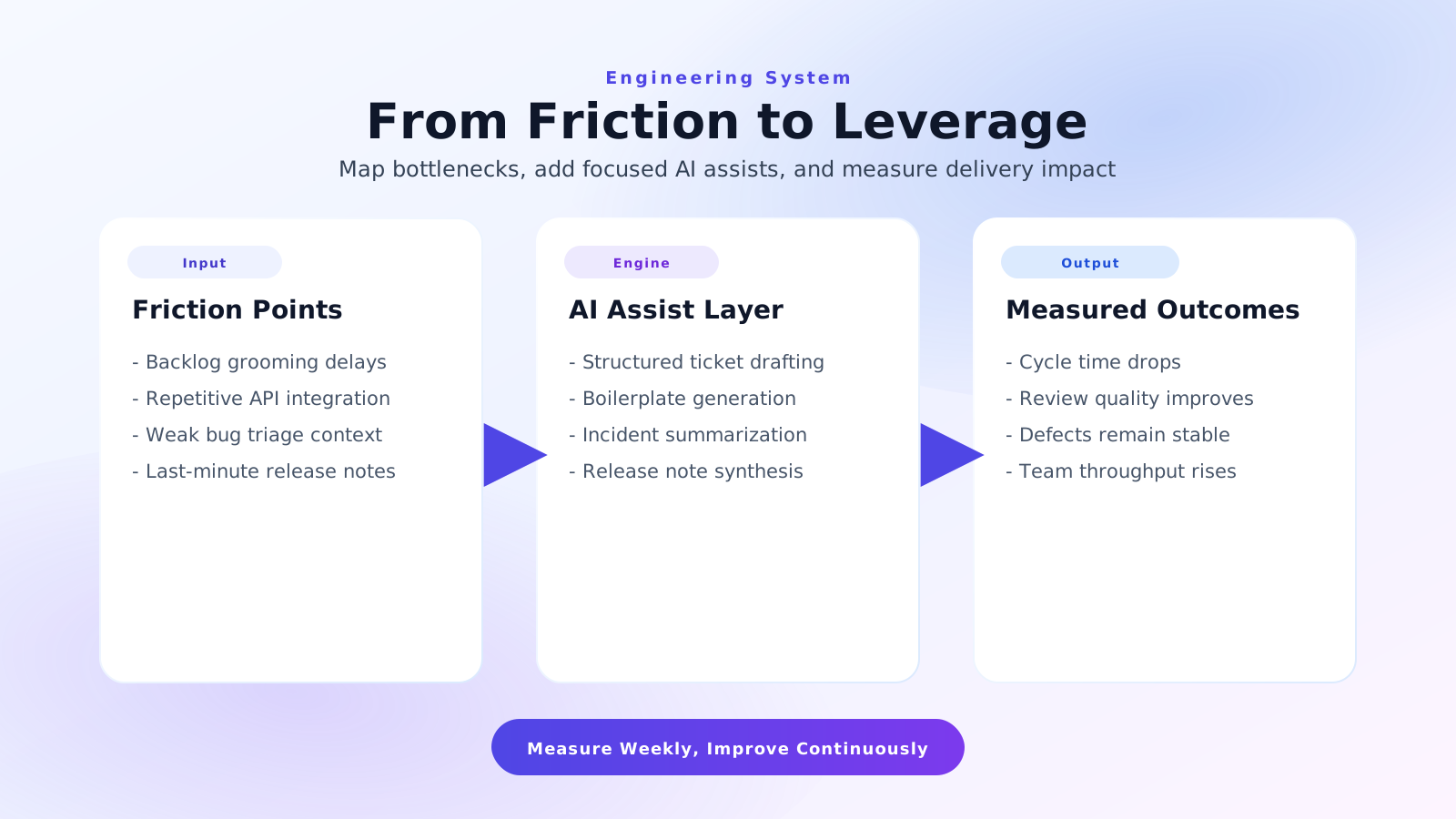
List the repeated points where work slows down:
- backlog grooming that takes too long
- repetitive API integration tasks
- shallow bug triage with poor context
- release notes written at the last minute
Once those points are visible, pair each one with a lightweight AI assist that can be measured.
Build Tiny, Reliable Loops #
A useful pattern is:
- input template
- AI output
- human review checklist
- merge or reject
For example, for ticket refinement:
- input: issue title, user impact, constraints
- output: acceptance criteria and edge cases
- review: scope risk, dependency risk, rollout risk
This loop is simple, auditable, and easy to improve each sprint.
Avoid the Common Failure Mode #
Many teams over-automate too quickly. They skip review standards and then lose trust in outputs.
Treat AI-generated artifacts as drafts with clear quality gates. The goal is not zero-touch automation. The goal is faster high-quality decisions.
What To Measure #
Track a small set of metrics:
- cycle time from ticket start to merge
- escaped defects per release
- time spent in code review
- time to first customer feedback
If cycle time drops while escaped defects stay stable, your workflow is improving.
Closing Thought #
AI advantage comes from consistency. Teams that create repeatable loops outperform teams that rely on ad-hoc prompting.
Explore related topics: Our services | Case studies | Contact us